🎓 AI-Augmented Additive Manufacturing 🎓
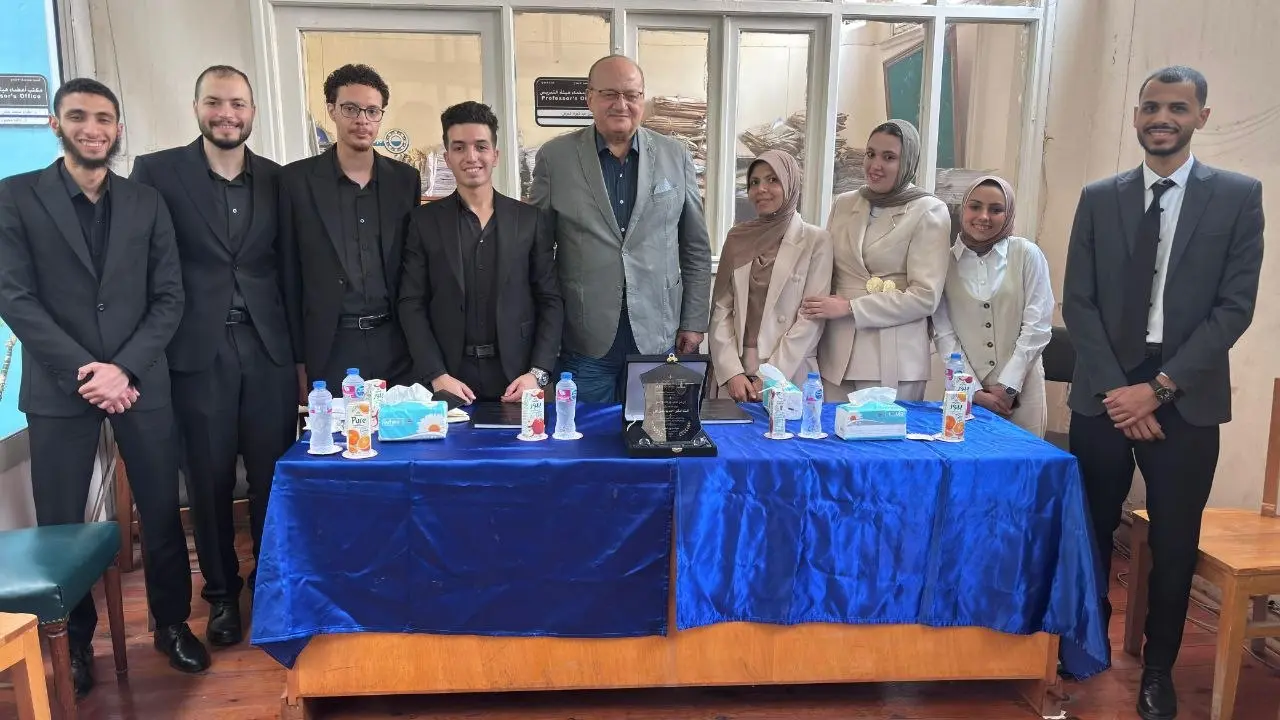
Graduation Project Team
ALX FFF (Alexandria Layer Xperiments) began as a graduation project aiming to bridge the gap between conventional manufacturing and intelligent automation. We integrated Artificial Intelligence (AI), Design of Experiments (DOE), and Real-Time Computer Vision into the Additive Manufacturing workflow. Our goal was to overcome persistent challenges in FDM 3D printing—such as dimensional inaccuracies, thermal distortions, and print failures—establishing a framework for defect-free, intelligent 3D printing systems applicable to industrial contexts.
🎓 Under The Supervision of
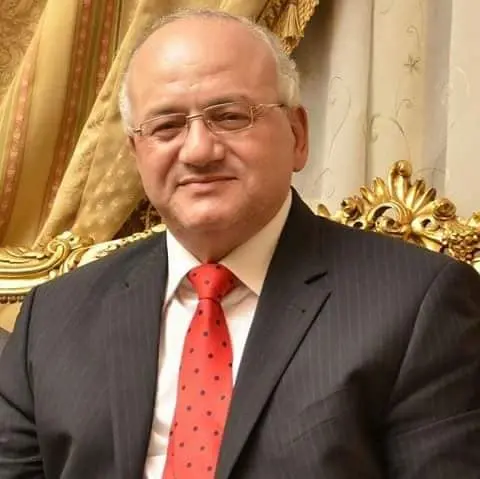
Prof. Dr. Ahmed Bahaadin Khairy
🎓 Project Supervisor & Mentor
🎓 Former Deputy Minister of Higher Education
🏛️ Founding President of E-JUST ⚡ Pioneer of Mechatronics in Egypt
🎓 Former Deputy Minister of Higher Education
🏛️ Founding President of E-JUST ⚡ Pioneer of Mechatronics in Egypt
Prof. Dr. Ahmed Bahaadin Khairy is a monumental figure in engineering education and industrial innovation in Egypt and the region. As the Founding President of the Egypt-Japan University of Science and Technology (E-JUST), former Deputy Minister of Higher Education, and a senior member of the Supreme Council of Universities' Engineering Committee, Dr. Khairy has played a pivotal role in shaping modern technical higher education.
Renowned as a true academic pioneer who introduced Mechatronics and Intelligent Manufacturing Systems to Egyptian engineering curricula, Dr. Khairy bridges top-tier academic research with real-world industrial transformation. His mentorship of the ALX FFF project represents a continuation of his lifelong mission: inspiring next-generation engineers to pioneer AI-driven manufacturing and build industrial-grade solutions with uncompromised precision.
Renowned as a true academic pioneer who introduced Mechatronics and Intelligent Manufacturing Systems to Egyptian engineering curricula, Dr. Khairy bridges top-tier academic research with real-world industrial transformation. His mentorship of the ALX FFF project represents a continuation of his lifelong mission: inspiring next-generation engineers to pioneer AI-driven manufacturing and build industrial-grade solutions with uncompromised precision.
👥 Meet The Team
Profile 1 of 8
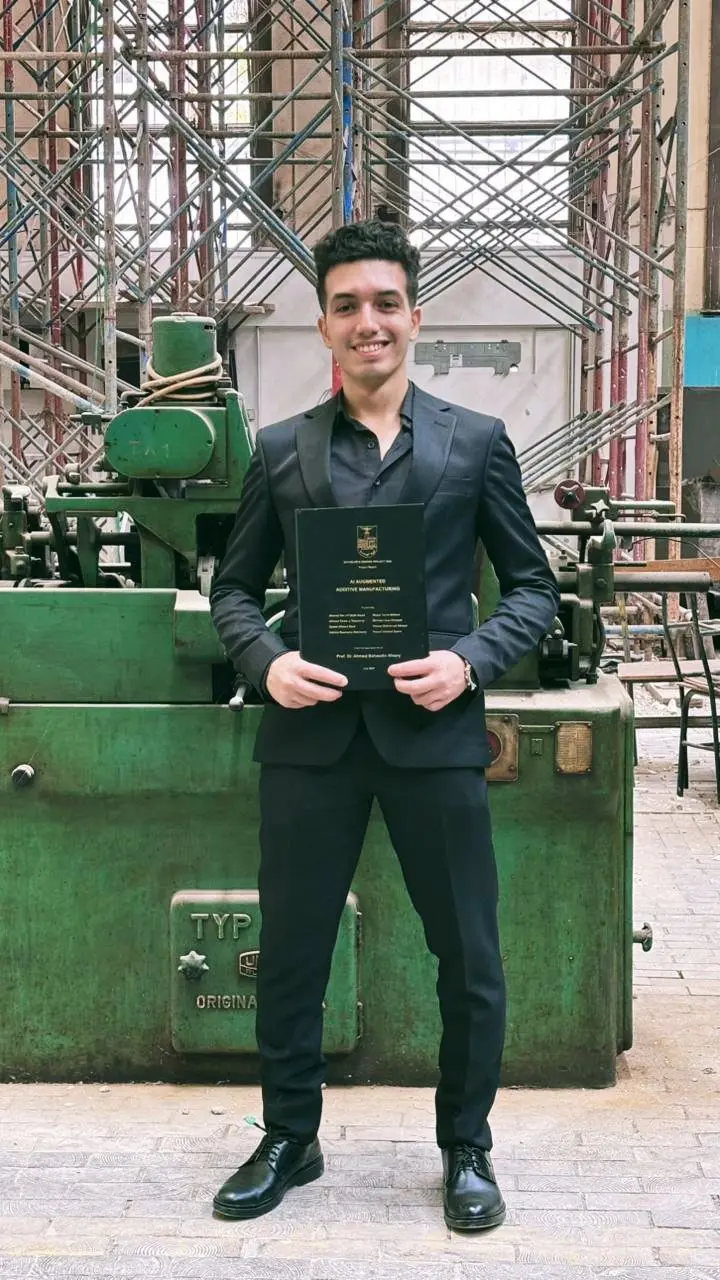
Yousef Samir
Project Team Leader
Mechanical Production Engineer
Yousef is the technical brain driving the ALX FFF platform. Combining a deep foundation in production engineering with applied AI, he led the development of the conversational Human-Machine Interface (HMI) by integrating Large Language Models (LLMs) with cloud infrastructure. His work bridges complex manufacturing algorithms with intuitive digital interfaces, enabling seamless interaction within intelligent manufacturing systems. With hands-on experience spanning additive manufacturing optimization, industrial metrology, and full-stack system architecture, Yousef translates workshop precision into modern digital workflows. His engineering focus centers on driving Industry 4.0 innovations—automating CAD/CAM cost calculations, fine-tuning FDM slicer pipelines, and embedding real-time AI intelligence into practical manufacturing and quality control operations.